


Get More Customers from AI, Search, Social & Shopping (Without Chasing Every New Platform)
Get More Customers from AI, Search, Social & Shopping (Without Chasing Every New Platform)
 14-01-2026 (Last modified: 14-01-2026)
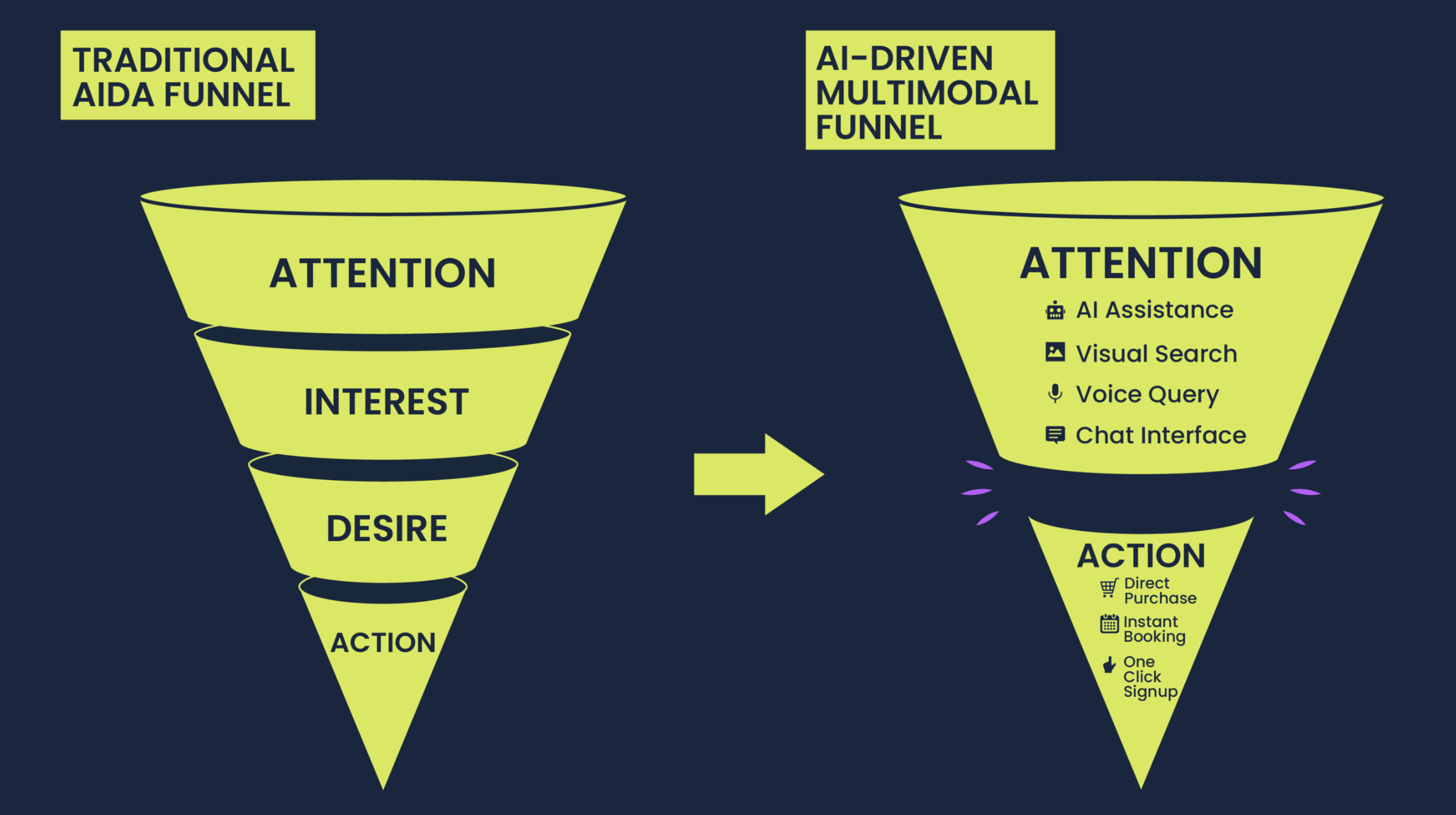
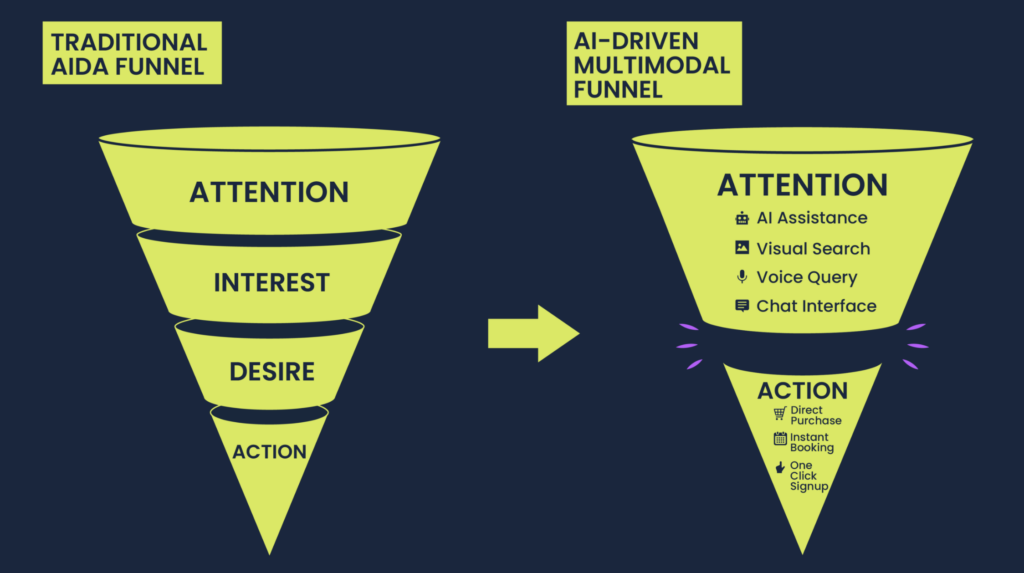
Most businesses are still optimising as if customers discover them in one place… But, they don’t.
These days, people find products and services through AI answers, search engines, social feeds, and shopping platforms – often in the same journey. If your optimisation only works in one of those channels, you’re leaving customers behind.
This guide explains how to get more customers from AI, Search, Social & Shopping by updating how you show up, how you’re understood, and how you’re trusted across all four.
It doesn’t mean four times as much work – just tweaking how you optimise certain steps. So follow along to find out what actually works now…
Why discovery has changed (and why optimisation needs to catch up)
A typical customer journey now looks like this:
-
they ask an AI tool a question
-
they check Google to compare options
-
they watch a short video or read comments on social
-
they search or browse on a shopping platform
-
then they decide
Optimising for one channel in isolation doesn’t match reality anymore.
From what we’re seeing, the businesses seeing consistent growth are the ones treating discovery as one connected system, not four separate strategies.
How do customers discover businesses through AI now?
AI tools don’t rank pages the way search engines do. They summarise, recommend, and filter.
To get more customers from AI, your content needs to be:
-
clear about what you do
-
confident about who it’s for
-
specific about outcomes
-
consistent across the web
AI systems favour sources that:
-
explain things plainly
-
answer real questions
-
show signs of real-world use
-
appear repeatedly in trusted contexts
What to update now:
-
Write content that answers full questions, not keywords
-
Add clear definitions, comparisons, and examples
-
Include simple experience-based statements like “we’ve seen…”
-
Make sure your brand description is consistent everywhere
If AI can’t easily describe your business in one sentence, it won’t recommend you.
How should SEO change to get more customers from search?
Keyword-first SEO is fading. Outcome-first SEO is replacing it.
Search engines still matter, but they now reward:
-
engagement
-
clarity
-
usefulness over volume
To get more customers from search in 2026:
-
Optimise pages around problems and decisions, not just phrases
-
Group content into clear topic clusters
-
Focus on what users do after they land on the page
-
Test headlines, intros, and CTAs instead of guessing
We’ve seen pages with lower traffic outperform high-traffic ones simply because they guided users better once they arrived.
Search engines don’t just measure relevance anymore. They measure satisfaction.
How does social media fit into modern discovery?
Social platforms are no longer just “top of funnel”. They’re search engines with opinions.
People use:
-
TikTok to search “best X for Y”
-
YouTube to evaluate options
-
Instagram to validate brands
-
LinkedIn to check credibility
To get more customers from social:
-
Create content that answers one clear question at a time
-
Focus on clarity over polish
-
Repeat your core message consistently
-
Show proof, not just promises
In our experience, short, helpful videos explaining one specific thing consistently outperform high-production brand content.
Social discovery is about being understandable, not impressive.
How should you optimise for shopping platforms?
Whether it’s Google Shopping, Amazon, Etsy, or a marketplace in your niche, the same rule applies:
Your product needs to make sense instantly.
To get more customers from shopping platforms:
-
Write product titles that explain use, not just names
-
Front-load benefits in descriptions
-
Use plain language over brand language
-
Answer common objections directly
-
Make comparisons easy
Shopping platforms reward:
-
clarity
-
low friction
If customers hesitate, platforms quietly stop showing your product.
What ties AI, Search, Social & Shopping together?
Consistency and testing.
The businesses winning across all four channels do three things well:
-
They say the same thing everywhere
Same positioning. Same audience. Same promise. -
They optimise for understanding, not algorithms
If a human gets it quickly, platforms usually do too. -
They test instead of assuming
Headlines. Descriptions. CTAs. Structure.
This is where tools like PageTest matter. When you can test language and layout quickly, you stop guessing and start learning what actually brings customers in.
What should small businesses focus on first?
If resources are limited, prioritise in this order:
-
One clear description of what you do and who it’s for
-
One strong landing page that converts
-
Content that answers your customers’ top 5 questions
-
Social content that reinforces the same message
-
Product or service pages that remove hesitation
You don’t need to be everywhere. You need to be clear wherever you show up.
Final takeaway
To get more customers from AI, Search, Social & Shopping, you don’t need four different strategies.
You need:
-
one clear message
-
one defined audience
-
content that answers real questions
-
pages that guide users to act
-
testing instead of guesswork
Discovery is no longer about ranking first.
It’s about being the most understandable and trusted option wherever customers are looking.
say hello to easy Content Testing
try PageTest.AI tool for free
Start making the most of your websites traffic and optimize your content and CTAs.
Related Posts

31-08-2026
 Becky Halls
Spiralyze alternatives: CRO agency or software in 2026?
Spiralyze makes an offer that’s hard to argue with. “30% lift in 90 days. No fee until we deliver.” More precisely: 10 tests, 3 wins, more than 30% lift in your first 90 days, and you pay nothing until they’ve done it. I’ll say plainly what most competitor pages wouldn’t. On risk alone, that’s a better offer than […]

31-08-2026
Becky Halls
AB Tasty alternatives: an honest comparison for 2026
AB Tasty is a strong platform with a well-liked support team, sitting at 4.4 on G2 across 418 reviews. Reviewers on TrustRadius describe it as better value than pricier AB Tasty alternatives, which in this category is a real compliment. It also has the most unusual buying process here. No published pricing, and no free […]

31-08-2026
Becky Halls
The best Optimizely alternative: a comparison for 2026
Optimizely is the most capable experimentation platform on the market. I don’t think that’s seriously disputed. Server-side testing, feature flags, personalization, statistical depth, and it all runs at genuine enterprise scale. In 2026 they’ve wrapped the whole thing in “agentic experimentation” branding and shipped an AI variation development agent, and the underlying Web Experimentation product […]