


The Biggest Marketing Shifts Coming in 2026: What Actually Matters Now
The Biggest Marketing Shifts Coming in 2026: What Actually Matters Now
 13-12-2025 (Last modified: 13-12-2025)
2026 isn’t bringing “the future of marketing.” It’s bringing the correction. The dust is finally settling after years of AI noise, platform changes, and search unpredictability. And we’re now seeing what actually sticks, and the shifts that will shape how marketing teams operate for the next decade…
These aren’t trends for trends’ sake. They’re structural changes in how people discover content, how platforms decide what to show, and how businesses compete for attention.
Here are the biggest shifts we think are worth paying attention to with marketing trends 2026:
1. AI agents are becoming the new junior marketers
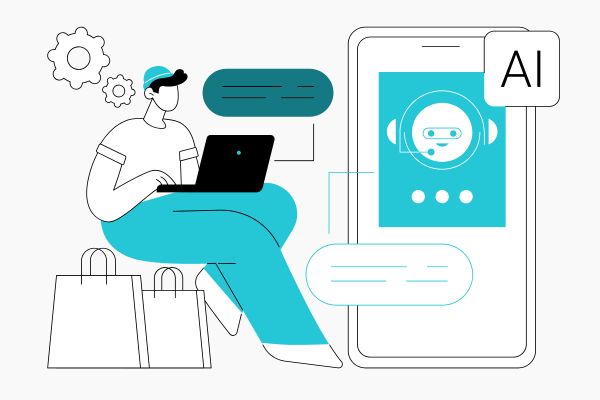
Every marketing team in 2026 has at least one AI agent quietly running in the background, handling repetitive work teams used to drown in.
We’re talking about:
-
researching audiences
-
generating variations for A/B tests
-
summarising customer feedback
-
clustering keywords and topics
-
drafting campaign ideas
-
creating first-pass landing pages
-
monitoring analytics and flagging anomalies
The shift isn’t “AI replaces marketers.” It’s more subtle: AI replaces the grunt work and leaves humans to judge direction, strategy, nuance, and brand.
We’ve seen teams go from spending 15 hours per week preparing reports to just approving an automated summary that an agent delivers in Slack every Monday morning.
“AI hasn’t replaced marketers. It has replaced the busywork. The value now comes from judgement, clarity, and the ability to steer strategy while the agents handle the execution.” Becky Halls, PageTest.ai
What changes in 2026:
-
Workflows become agent-led. Humans step in only when judgement is required.
-
Testing scales dramatically. Tools like PageTest.AI aren’t “nice-to-have” anymore – they’re how teams stay competitive.
-
The skillset shifts. Marketers become editors, orchestrators, and decision-makers rather than manual producers.
If 2023–2025 was about dabbling in AI tools, 2026 is about operationalising them.
2. Keyword-first SEO is fading, replaced by intent and entity visibility
SEO in 2026 is unrecognisable compared to the checklist era. The big shift: ranking for keywords is no longer the goal – showing up wherever answers are delivered is.
Three things changed this:
a) AI Overviews (and successors)
Search engines are summarising your content whether you like it or not. Your visibility depends less on matching a keyword and more on becoming a trusted entity in a topic cluster.
b) LLM-powered search
People ask full questions now. Not “best CRM tools,” but:
“Which CRM is easiest for a team of 5 with no dedicated admin?”
LLMs pick brands they trust, not pages with the best optimisation.
c) Authority signals matter more than on-page tweaks
Google and AI engines are leaning on:
-
brand reputation
-
consistent expert content
-
real-world signals
-
high-quality backlinks
-
behavioural patterns (who users prefer to click, save, or revisit)
So the modern strategy looks like:
-
Build topical authority in clusters
-
Create content that answers outcomes, not phrases
-
Optimise entities, not pages
-
Test page variations for engagement rather than obsessing over keyword density
This is why so many sites that “did everything right” in SEO lost traffic between 2023 and 2025 – they were optimising for the wrong thing.
“In 2026, the teams winning aren’t the ones producing the most content but the ones testing the most ideas. Iteration has quietly become the new competitive edge.” Ian Naylor, PageTest.ai
3. Discovery is shifting hard toward YouTube, TikTok, and Reddit
Search isn’t dying. But discovery – the place where users first hear about something – has moved.
By 2026, three platforms dominate early-stage awareness:
YouTube
Still the world’s second-largest search engine, and now the most trusted educational resource for many industries. Long-form is thriving again because:
-
AI chaptering makes content easier to skim
-
transcripts feed search engines
-
“Watch time as trust signal” is now a thing
TikTok
TikTok Search has become mainstream. Users increasingly search:
-
how-to
-
best tools for…
-
alternatives to…
-
tutorials
-
reviews
And TikTok rewards recency, personality, and clarity more than polished production.
One real shift we’ve seen: businesses that never touched video are now producing weekly clips because the ROI is finally predictable.
Reddit is the new Q&A layer of the internet. Thanks to its new licensing deals, AI engines pull Reddit threads directly into answers. If your brand isn’t mentioned organically in discussions, you simply won’t appear in many LLM-generated results.
Discovery now looks like:
-
A TikTok clip sparks interest
-
A YouTube video builds trust
-
A Reddit comment validates the choice
-
Google search is where they compare options
Search used to be the starting point. In 2026, it’s the confirmation step.
4. Google’s ad systems are shifting from “targeting” to “predicting”
Targeting used to be about choosing audiences. Now it’s about choosing signals and letting the model predict who’s most likely to convert.
Google’s AI-driven ad stack is evolving around four pillars:
-
First-party data
-
Predictive lookalikes
-
Intent modelling
-
Outcome-based bidding
By 2026, Performance Max isn’t “one campaign to rule them all.” It’s the default format for most advertisers. Manual targeting is slowly fading because the model is better at understanding conversion likelihood than we are.
This means:
-
Creative quality matters more than targeting
-
Messaging variety feeds the model better than strict segmentation
-
Results rely on data richness, not manual knobs
We’ve seen campaigns with mediocre creative but perfect audience targeting lose badly to campaigns with strong creative and minimal targeting controls. The model wants inputs (creatives, signals) and volume, not manual slicing.
5. Brands are competing on trust, not reach
Because AI systems summarise so much content, brands with:
-
credibility
-
transparency
-
clear expertise
-
real user signals
-
consistent content
…win more placements in AI-generated answers.
This flips the old funnel. Users don’t compare ten websites anymore. They get one or two recommended answers and choose from there.
Trust is the new distribution.
And in our experience, the brands gaining the fastest aren’t the loudest – they’re the most helpful.
6. Testing and iteration become the central growth skill
The gap between “good enough” and “top performing” content is widening. The only reliable way to win in 2026 is through constant iteration.
Teams are:
-
testing landing page structures
-
testing video hooks
-
testing messaging angles
Tools like PageTest.AI and others make multivariate testing accessible, fast, and non-technical. If you’re not testing, you’re relying on instinct – and instinct simply loses to data at scale.
We’ve seen businesses double conversions without redesigns. Just testing language, order, and framing.
7. The homepage is no longer the front door
In 2026, your homepage is a formality. Real entry points are:
-
TikTok discovery
-
Reddit discussions
-
AI answers
-
Newsletter mentions
-
Deep-linked landing pages
-
Standalone microsites
Your homepage matters for brand polish. But your content ecosystem is what earns new visitors.
This changes how businesses think about their digital footprint. You don’t need one perfect website. You need dozens of high-performing “entry moments.”
Marketing Trends 2026 – What to do with all this
A few practical takeaways for 2026:
-
Start treating AI agents as part of your team, not an experiment
-
Build topical authority instead of chasing keywords
-
Diversify discovery: invest in YouTube, TikTok, and Reddit
-
Focus on predictive ad systems instead of manual targeting
-
Earn trust through usefulness, not volume
-
Test everything – especially wording, layout, and angles
-
Build content that works across search, social, and AI engines
Marketing isn’t getting harder. It’s getting clearer. The old shortcuts don’t work anymore, but the teams who adapt early have a huge advantage.
say hello to easy Content Testing
try PageTest.AI tool for free
Start making the most of your websites traffic and optimize your content and CTAs.
Related Posts

31-08-2026
 Becky Halls
Spiralyze alternatives: CRO agency or software in 2026?
Spiralyze makes an offer that’s hard to argue with. “30% lift in 90 days. No fee until we deliver.” More precisely: 10 tests, 3 wins, more than 30% lift in your first 90 days, and you pay nothing until they’ve done it. I’ll say plainly what most competitor pages wouldn’t. On risk alone, that’s a better offer than […]

31-08-2026
Becky Halls
AB Tasty alternatives: an honest comparison for 2026
AB Tasty is a strong platform with a well-liked support team, sitting at 4.4 on G2 across 418 reviews. Reviewers on TrustRadius describe it as better value than pricier AB Tasty alternatives, which in this category is a real compliment. It also has the most unusual buying process here. No published pricing, and no free […]
31-08-2026
Becky Halls
The best Optimizely alternative: a comparison for 2026
Optimizely is the most capable experimentation platform on the market. I don’t think that’s seriously disputed. Server-side testing, feature flags, personalization, statistical depth, and it all runs at genuine enterprise scale. In 2026 they’ve wrapped the whole thing in “agentic experimentation” branding and shipped an AI variation development agent, and the underlying Web Experimentation product […]