


The Black Friday CRO checklist for people who left it late
The Black Friday CRO checklist for people who left it late
 12-11-2026 (Last modified: 12-11-2026)
Most Black Friday conversion guides assume you started planning in September. If you did, good for you. This one is for everyone else….
It’s mid-November. You have about 2 weeks. That rules out some things and makes others much more valuable, so this checklist is ordered by what actually returns something in the time you have left.
I’ll start with the bad part, because it changes what you should spend the fortnight on.
What you can’t fix in 2 weeks, and should stop trying to
You can’t run a meaningful A/B test before Black Friday. We sell A/B testing software and I’d still tell you that!
Two reasons: First, you need roughly 1,000 visitors and 100 conversions per variation before a result means anything, and most pages won’t get there in time. Second, and worse, Black Friday traffic doesn’t behave like your normal traffic. It’s colder, more price-driven, and arriving from different sources. A test that runs across the spike measures a visitor you won’t see again until next November.
So anything you learn from a test started on 25 November is probably wrong, and you’ll act on it in January. Our sample size guide covers the maths if you want to check your own numbers.
You can’t redesign anything. Shipping a new template the week before your biggest trading day is how sites break on the day they can least afford it.
You can’t fix a traffic problem. With no one arriving, conversion work has nothing to work with. That’s a January problem.
What you can do is fix things that are plainly broken, and those don’t need testing. If your checkout fails on mobile, you don’t need an experiment to tell you to fix it.
Week 1: fix what’s broken
None of these are experiments. They’re defects. Work through them in order.
1. Open your own checkout on a phone, on mobile data
Not on your laptop. Not on office wifi. An actual phone on 4G, the way most of your Black Friday traffic will arrive.
Buy something. Go all the way through. Most people doing this for the first time find at least one thing they didn’t know about.
2. Run Lighthouse on your highest-traffic landing page
It’s built into Chrome DevTools and takes 2 minutes. Set it to mobile. Look at Largest Contentful Paint first.
If it’s over 2.5 seconds you’re losing people before they see anything, and that compounds on every page they visit. More on the conversion cost in our piece on Core Web Vitals and mobile conversion rates.
Quick wins that don’t need a developer: compress your hero image, remove any tracking script you can’t name the purpose of, and turn off anything loading a web font you aren’t using.
3. Put your shipping cut-off date where people can see it
This is the single most common avoidable abandonment in November and December. People are buying gifts against a deadline. If they can’t tell whether it’ll arrive, they leave.
Put the date on the product page, in the cart, and at checkout. Not just on a shipping policy page no one opens.
4. Make the returns policy visible before checkout
Same logic. Gift buyers need to know the recipient can return it. Burying this costs you more in November than any other month.
5. Check your offer is visible without scrolling on mobile
Open your homepage on a phone. Can you see what the deal is, and a way to act on it, without scrolling?
A lot of sites put the Black Friday banner in a slider that rotates away before anyone reads it. If yours does, make it static.
6. Test your error states
Try to buy something out of stock. Try a card that declines. Try a promo code that’s expired.
Dead ends on those three screens quietly cost real money, and almost no one checks them because they’re testing the happy path.
7. Search for your 10 best-selling products using your own site search
If your top sellers don’t come up first, fix the synonyms. People who use site search convert at a far higher rate than people who browse, so this is high value for low effort.
Week 2: check, don’t guess
These are 20-minute jobs that tell you where to point the limited time you have left.
8. Find where people actually drop off
Build a funnel in GA4 for your main path: landing page, product page, cart, checkout, purchase. Look at which step loses the most people.
Fix the worst step. Don’t spread effort evenly across all of them.
9. Compare mobile and desktop conversion rates
If mobile is converting at half the rate of desktop and most of your traffic is mobile, that gap is your whole problem and everything else is a distraction.
10. Look at site search queries that returned nothing
Every one is a person who wanted to give you money and couldn’t find the thing. It’s the cheapest list of fixes you’ll ever get.
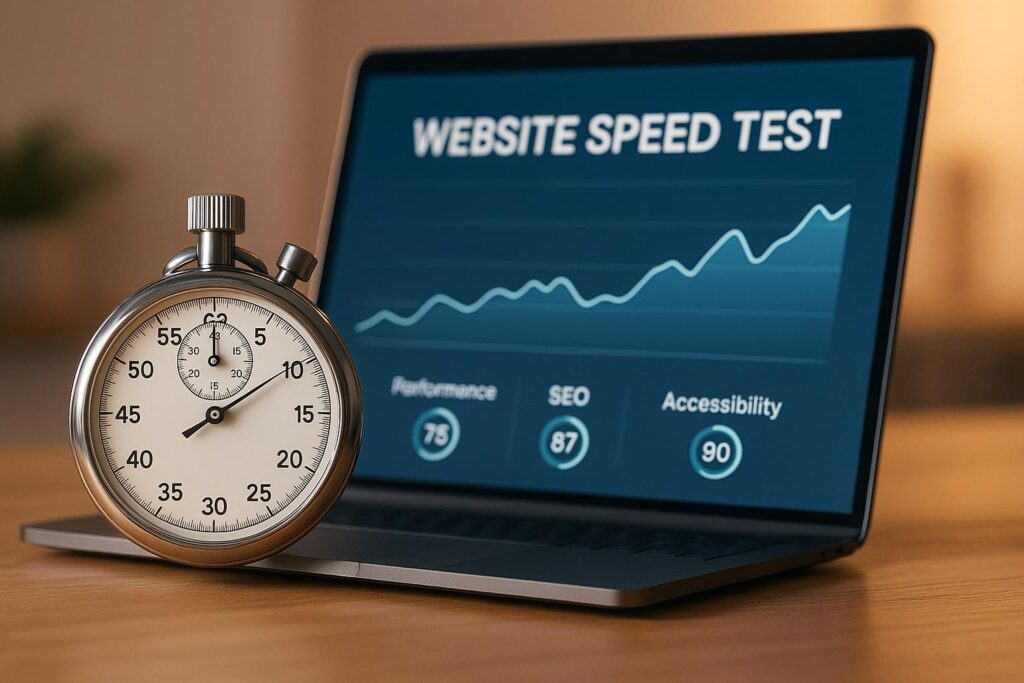
11. Check your page speed under load
Your site is fast with 40 people on it. Black Friday is not 40 people.
Most sites are never load tested before their busiest day of the year. If you have a developer, k6 or JMeter will simulate it in an afternoon. Both are free, and we cover them in our guide to web testing tools.
12. Know your rollback plan
Write down, before the weekend, who can revert a change and how long it takes. You don’t want to be working that out at 9am on the Friday.
Peak week: watch, don’t change
From the Wednesday before Black Friday, the job changes. Stop improving and start observing.
- Freeze changes unless something is broken. Every edit during peak is a risk with no time to catch the fallout.
- Check the funnel daily, not hourly. Hourly numbers are noise and you’ll overreact.
- Watch for anything that breaks under load, particularly checkout and payment.
- Write things down. Which products moved, which pages got traffic you didn’t expect, what people asked support. This is the raw material for next year and you will not remember it in January.
One exception. If you spot something plainly broken, fix it. That isn’t a test, it’s a repair.
The week after: the bit almost everyone skips
This is where the actual return lives, and it takes an hour.
Write down what happened while it’s fresh. Top pages, worst drop-off step, mobile versus desktop, what sold, what didn’t.
List the 5 questions you couldn’t answer. Things like “would a different headline on the sale page have converted better” or “did the free shipping threshold help or hurt”. You now have a year to find out, and you’ve just collected the traffic data to size the tests properly.
Then test those in January, not next November. That’s the whole point. Black Friday tells you what to test. January through October is when you test it. By the time next November arrives you’re deploying things you already know work, rather than guessing under pressure.
If you want help avoiding the usual traps when you start, common A/B testing mistakes is worth 5 minutes first.
The short version
- Buy something on your own site, on a phone, on mobile data
- Run Lighthouse on mobile, fix Largest Contentful Paint
- Shipping cut-off date on the product page, cart and checkout
- Returns policy visible before checkout
- Offer visible on mobile without scrolling
- Test the out-of-stock, declined card and expired code screens
- Check site search finds your best sellers
- Build a GA4 funnel, fix the worst step
- Compare mobile and desktop conversion
- Read your zero-result site searches
- Load test if you can
- Agree a rollback plan
- Freeze changes during peak
- Write everything down
- Test the questions in January
FAQs
Is it too late to improve conversions before Black Friday?
No, but the useful work changes. You can still fix broken checkouts, slow pages, missing shipping dates and invisible offers. You can’t run reliable experiments or redesign anything.
Should I A/B test during Black Friday?
Generally no. Peak traffic behaves differently from your normal traffic, so results don’t transfer to the rest of the year, and most pages won’t reach statistical significance in the window anyway. Collect data during peak, test in January.
What’s the single highest-impact fix in the last 2 weeks?
Going through your own checkout on a phone using mobile data. It finds more real problems per minute than anything else on this list, and it’s free.
Do countdown timers actually improve conversions?
Sometimes, and less often than people assume. A timer on a genuine deadline can help. A timer that resets when you reload the page trains people not to believe you. If you want to know whether yours works, that’s a test for January.
How much traffic do I need before A/B testing is worth it?
Roughly 1,000 visitors and 100 conversions per variation on the page you’re testing. Below that, tests take too long to be useful. Our sample size guide shows how to work it out properly.
What should I test first in January?
Whatever cost you the most money in November. Usually that’s the headline or the offer framing on your highest-traffic landing page, because it affects everything downstream. If you’re choosing a tool for it, our A/B testing platform comparison covers the market with real prices.
say hello to easy Content Testing
try PageTest.AI tool for free
Start making the most of your websites traffic and optimize your content and CTAs.
Related Posts

28-10-2026
 Becky Halls
Why Fixed A/B Tests Are Losing Ground to Adaptive Bandits
A growing argument in CRO circles this year is that the classic 50/50 A/B test is starting to show its age, and that AI-driven “bandit” algorithms are the better default. There’s a real case behind that argument. There’s also a real case for ignoring it if you’re not the audience it’s written for. Here’s both […]
28-10-2026
Becky Halls
CROLabs Just Launched an AI That Runs Your A/B Tests For You. Here’s What It Actually Does
A new entrant called CROLabs is pitching something bolder than most testing tools: multi-agent AI that finds the weak spots on your site, builds the fix, and runs the test on its own, with far less setup than a traditional platform asks for. We looked past the pitch to what it actually does, who it’s […]
28-10-2026
Becky Halls
Agentic AI Experimentation: What Optimizely’s Forrester Win Actually Means for Your Testing Stack
If you’ve seen the phrase “agentic experimentation” turn up in a vendor email or a conference deck this year, you’re not imagining a trend. Optimizely just picked up a Leader rating from Forrester partly on the strength of it, and the rest of the testing market is racing to describe its own AI the same […]